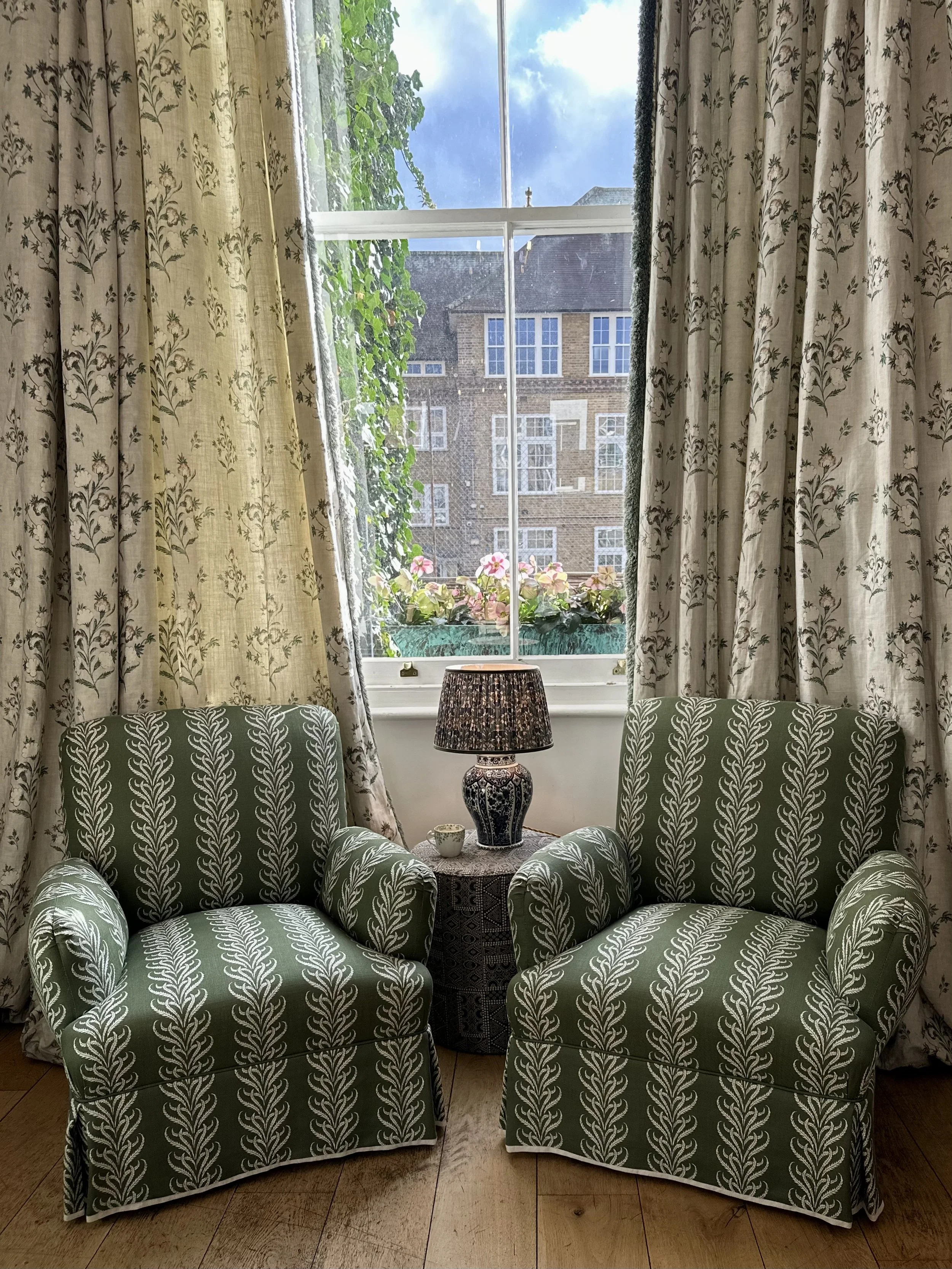
A pair of 19th-century French armchairs from the province, of compact and well-judged proportions, offering a comfortable scale suited to both traditional and relaxed interior settings.
Originating from Puisseguin, just east of Saint-Émilion in the Bordeaux region of France, the chairs reflect the restrained, practical character typical of regional French seating of the period, where comfort and durability were prioritised alongside form.
The frames have been traditionally upholstered by Golborne Upholstery, with a down-mix filling to the seat cushions, backs, and arms, respecting established 19th-century upholstery practices while ensuring everyday comfort. They are upholstered in Lorcan Reverse fabric in Banana Palm by English textile designer Cinny Aumonier, whose work reinterprets historic patterns with clarity and balance.
A pleasing and usable pair of French provincial armchairs, combining regional provenance, traditional craftsmanship, and a versatile decorative presence.
A pair of 19th-century French armchairs from the province, of compact and well-judged proportions, offering a comfortable scale suited to both traditional and relaxed interior settings.
Originating from Puisseguin, just east of Saint-Émilion in the Bordeaux region of France, the chairs reflect the restrained, practical character typical of regional French seating of the period, where comfort and durability were prioritised alongside form.
The frames have been traditionally upholstered by Golborne Upholstery, with a down-mix filling to the seat cushions, backs, and arms, respecting established 19th-century upholstery practices while ensuring everyday comfort. They are upholstered in Lorcan Reverse fabric in Banana Palm by English textile designer Cinny Aumonier, whose work reinterprets historic patterns with clarity and balance.
A pleasing and usable pair of French provincial armchairs, combining regional provenance, traditional craftsmanship, and a versatile decorative presence.
Recent Acquisitions at Susan Osbourne
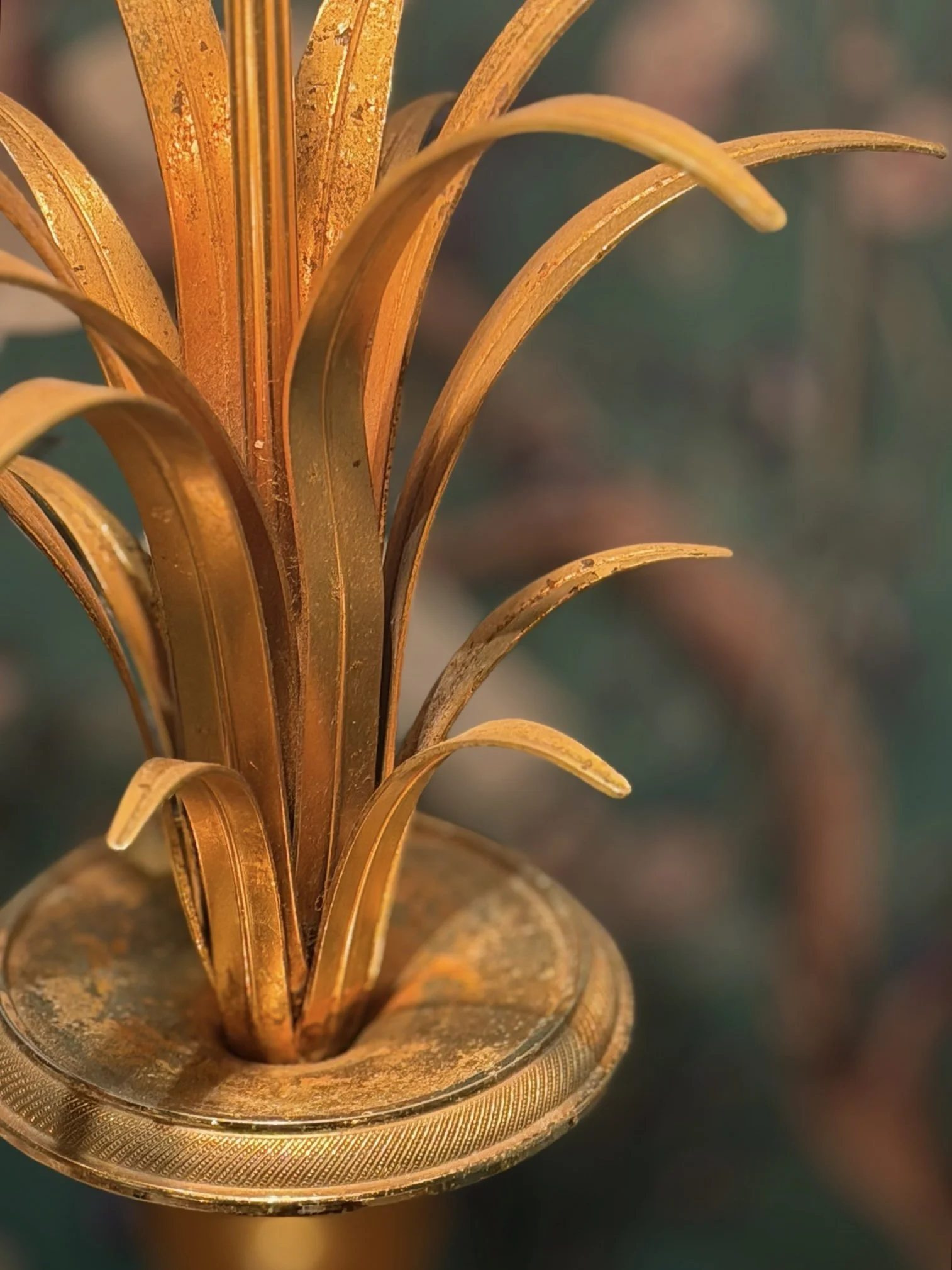
A refined example of the “Vase Roseaux” model by Maison Charles, France, circa 1970. The model name means 'vase full of reeds', reeds symbolise the tranquil life around river Nile and the lush Mediterranean, reeds motif stands for continuity, resilience and regeneration. Absorbed in the Greco-Roman decorative language from Egypt and the Mediterranean, later used in the Neo-Classical traditional for their vertical and disciplined beauty and form.
The gilt bronze reed-form mount rises from a hand-cut Baccarat crystal base (with Baccarat crystal mark intact, 'Taille Main' means hand-cut which distinguishes the quality of the crystal from the usual mid-20th century machine-made to special commissioned and hand-cut to the highest caliber by Maison Charles), likely a luxury piece designed and commissioned by Maison Charles, Baccarat supplied the corresponding base for this edition. Very rare, only piece in the market at present.
The gilt bronze mount is composed of stylised reeds arranged in vertical repetition, creating a sculptural yet architectural silhouette characteristic of Maison Charles’ refined neoclassical vocabulary.
FInished with gilt brass pinecone finial, introducing the antiquity, a classical motif symbolises renaissance, fertility, evergreen and immortality. A sculptural terminus echoing mediterranean vitality, together with reeds inspired by Egyptomania, finished with Baccarat crystal of hand-cut artisanal precisions, the composition of craftsmanship and references make the piece immortal.
'Taille Main' - Hand-cut artisanal crystal, made in France.
Recent Works
by Susan Osbourne
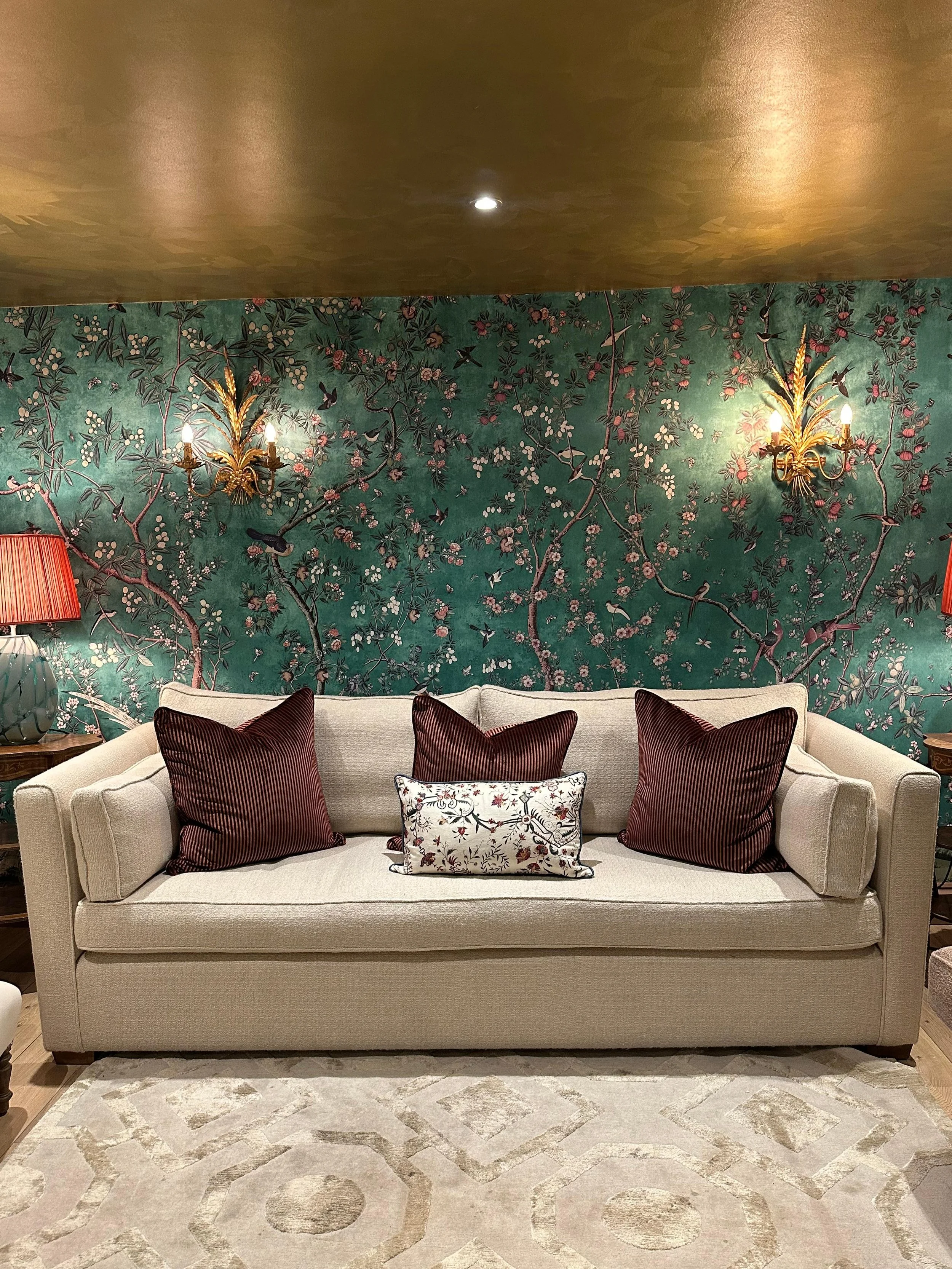
A well-proportioned Chelsea sofa raised on a hand-crafted beech frame, traditionally made in England and designed with generous, comfortable lines.
This sofa combines classic and contemporary styling with traditional craftsmanship. Hand built in our workshops, with a screwed and dowelled beech wood frame, hand tied coil springs. The seat cushion has a foam core wrapped in luxurious feather & down to give comfort without having to plump up. The back cushions are a comfy feather & down mix .
The model shown here measures: W 240cm D 95cm H 80cm is covered in a sumptuous wool/linen mix (100% Natural Fibres) woven in Scottish mills with wool shorn from local sheep, making it warm in the winter and cool in the summer.
The price shown is without the plus 16 meters of fabric for choice of reupholstery. The Sofa can be made to the size and dimensions of your choice. Please contact for a quotation.
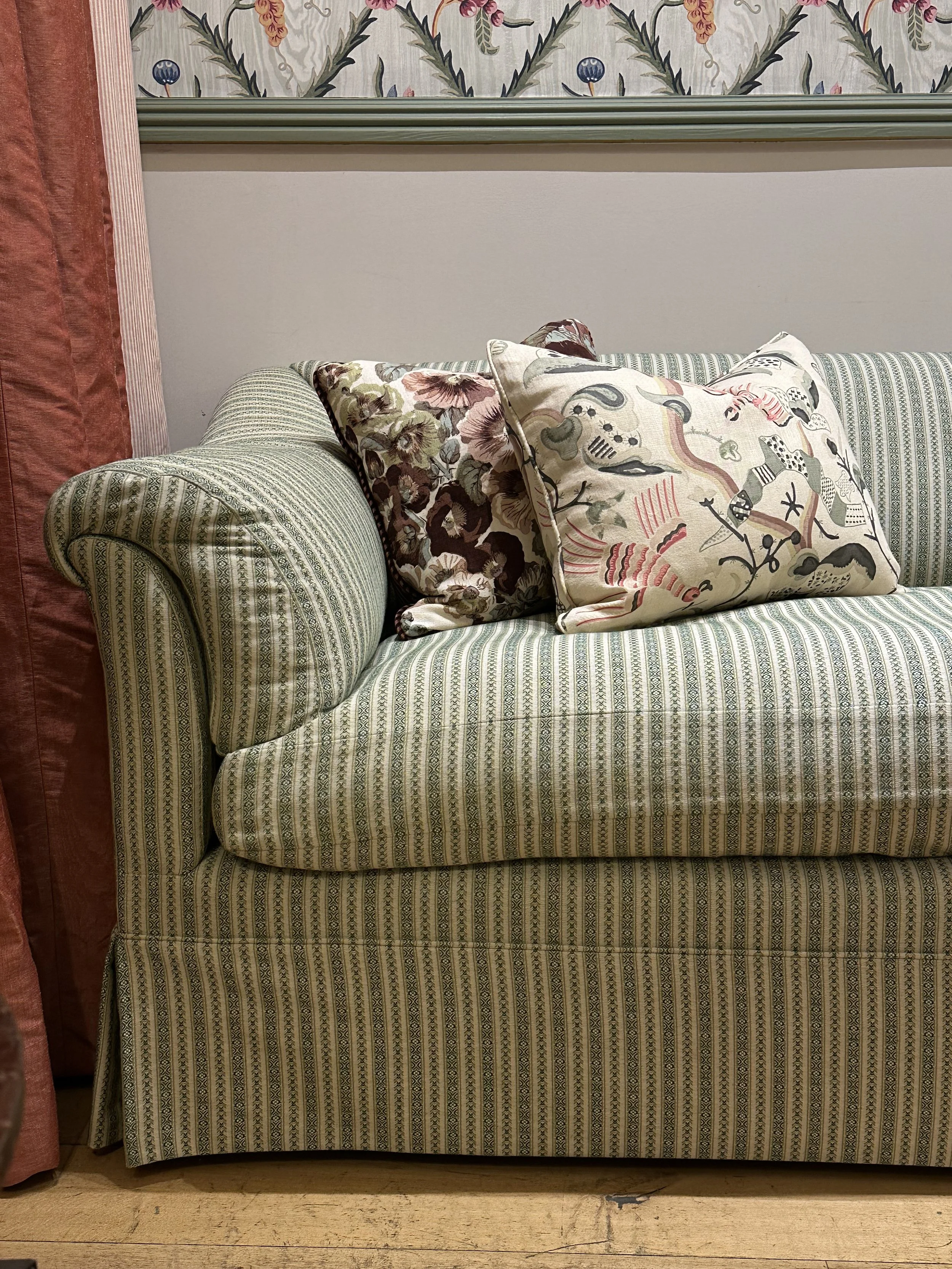
This sofa is a contemporary re-edition of the classic Howard & Sons “Portarlington” model, a form closely associated with turn of the19th- 20th century English design. The proportions are faithful to the original: a softly sloped back, low scroll arms and a long seat that emphasises comfort and ease.
Shown here upholstered in Susan Deliss’ Ticking (Forest Green / Basil), the sofa combines a traditional striped textile with a restrained, natural palette. The fabric’s fine weave and tonal variation complement the understated profile of the piece without dominating it.
The construction follows established upholstery methods: a beech wood frame, hand tied coil springs, horsehair internal filling, the back and arms covered with the down filled siege de duvet method and down filled seat cushion proving the luxurious comfort this craftsmanship affords.
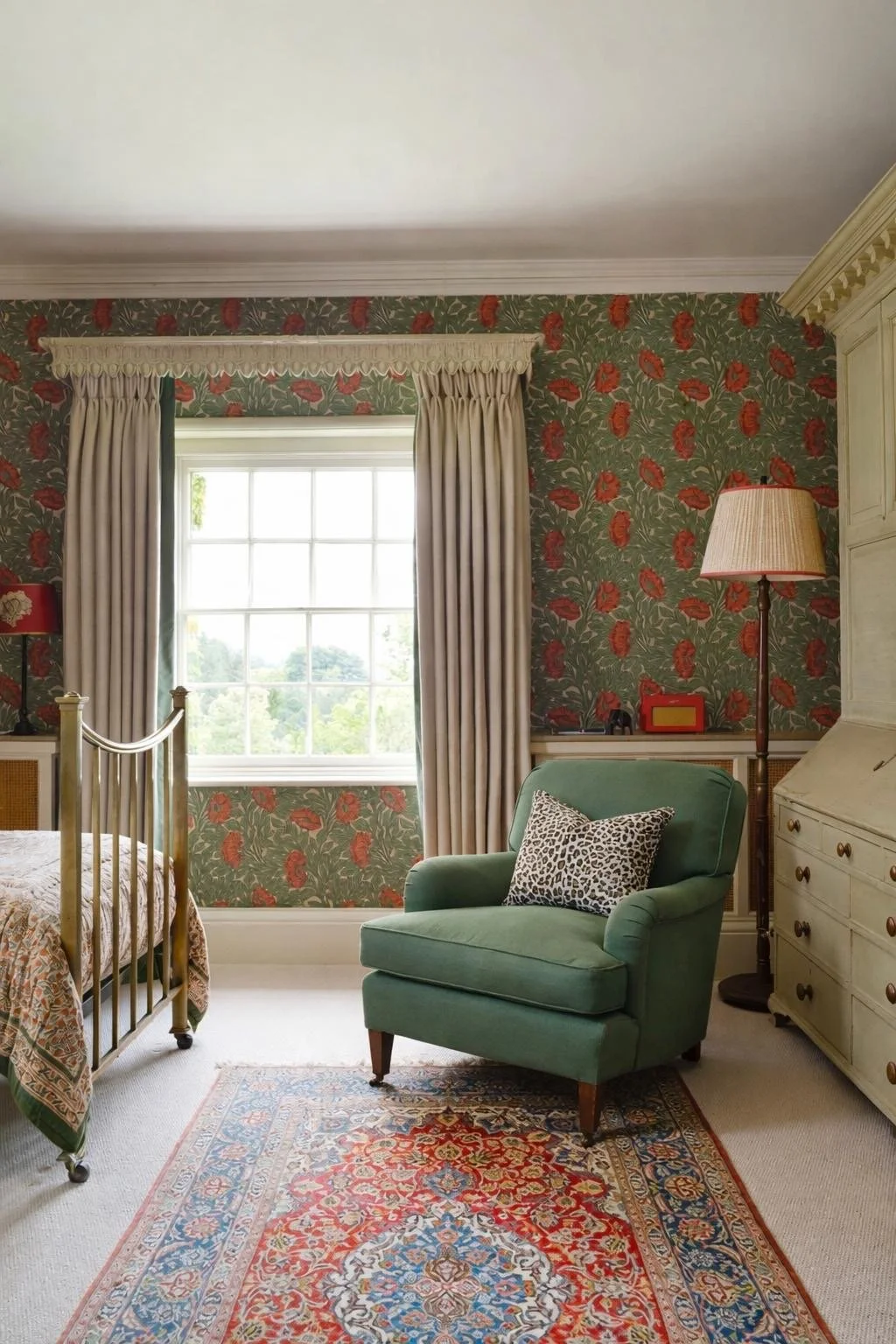
A contemporary re-edition inspired by the Howard & Sons Bridgewater model, echoing the proportions and comfort of the original design. equally sturdy as it is comfortable. It evokes the grandeur and ease of the 19th Century English Country house, shown here covered with a sturdy Schumacher green linen.
Drawing on the deep-seated comfort designs pioneered by Howard & Sons in the late 19th century. While not an exact reproduction, it follows the essential principles that defined Howard’s influence on English domestic furniture: a generously sprung seat, down-filled cushions, and softly sloped arms that promote a relaxed posture.
Reflecting the broader Victorian shift toward comfort and informality in the English Country House. Traditional upholstery methods are retained, including the beech wood frame, the essential siege de duvet back filling, natural fibre fillings; horsehair, coconut matting and cotton with a down cushion seat that recreates the signature comfort and softness associated with British upholstery workshops.
Squared mahogany legs on brass casters reference period precedents while allowing the chair to work in both traditional and contemporary interiors.
Optional matching footstool available.
Dimensions and weight are listed for each armchair.
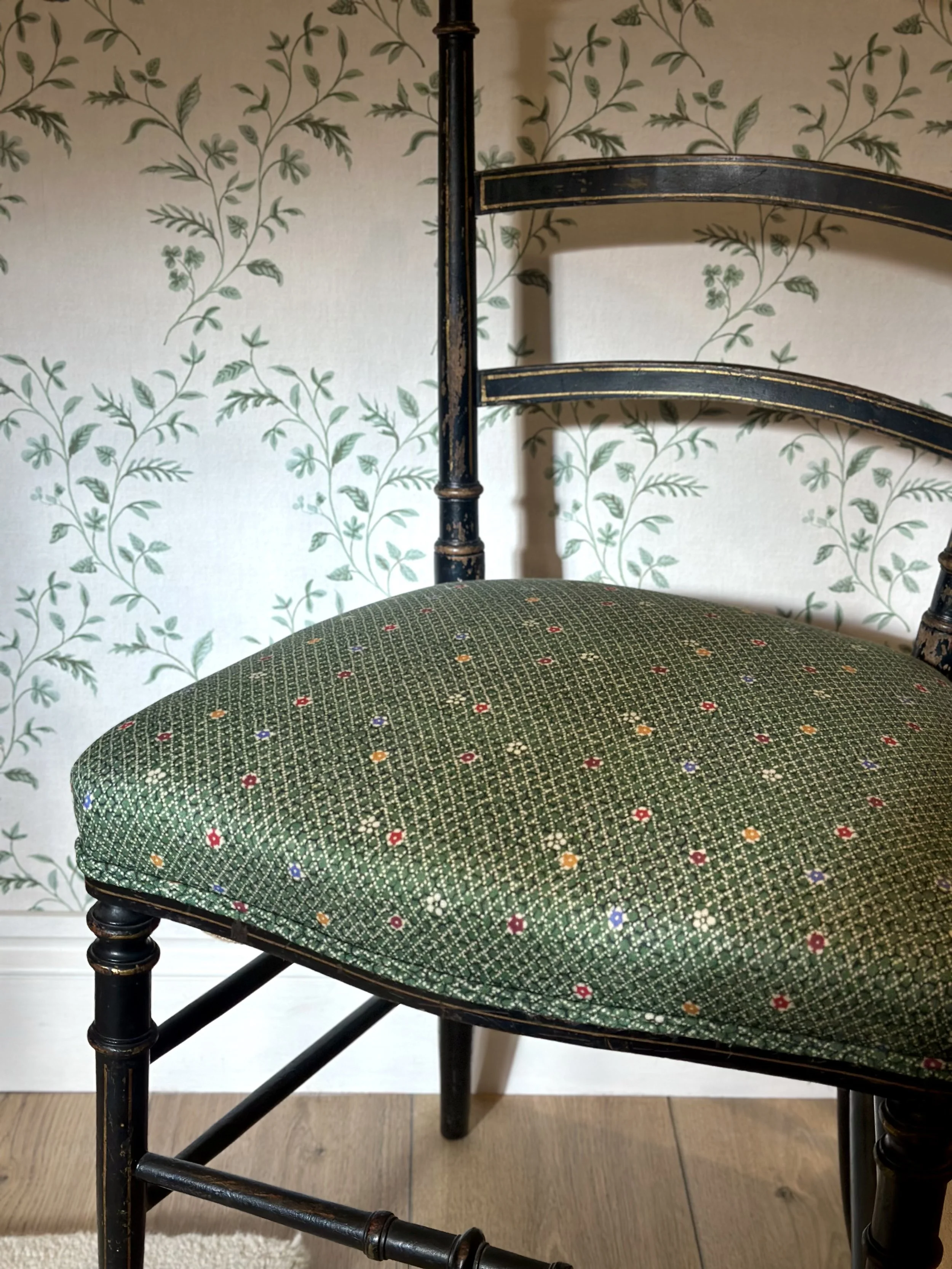
Pair of French Napoleon III Ebonised Bandeau-Back Side Chairs
A stamp on the back inscribed MAISON LEMARCHAND, IN H. LEMOINE, 17 rue des Tournelles IN PARIS Louis Edouard Lemarchand (1795-1872)
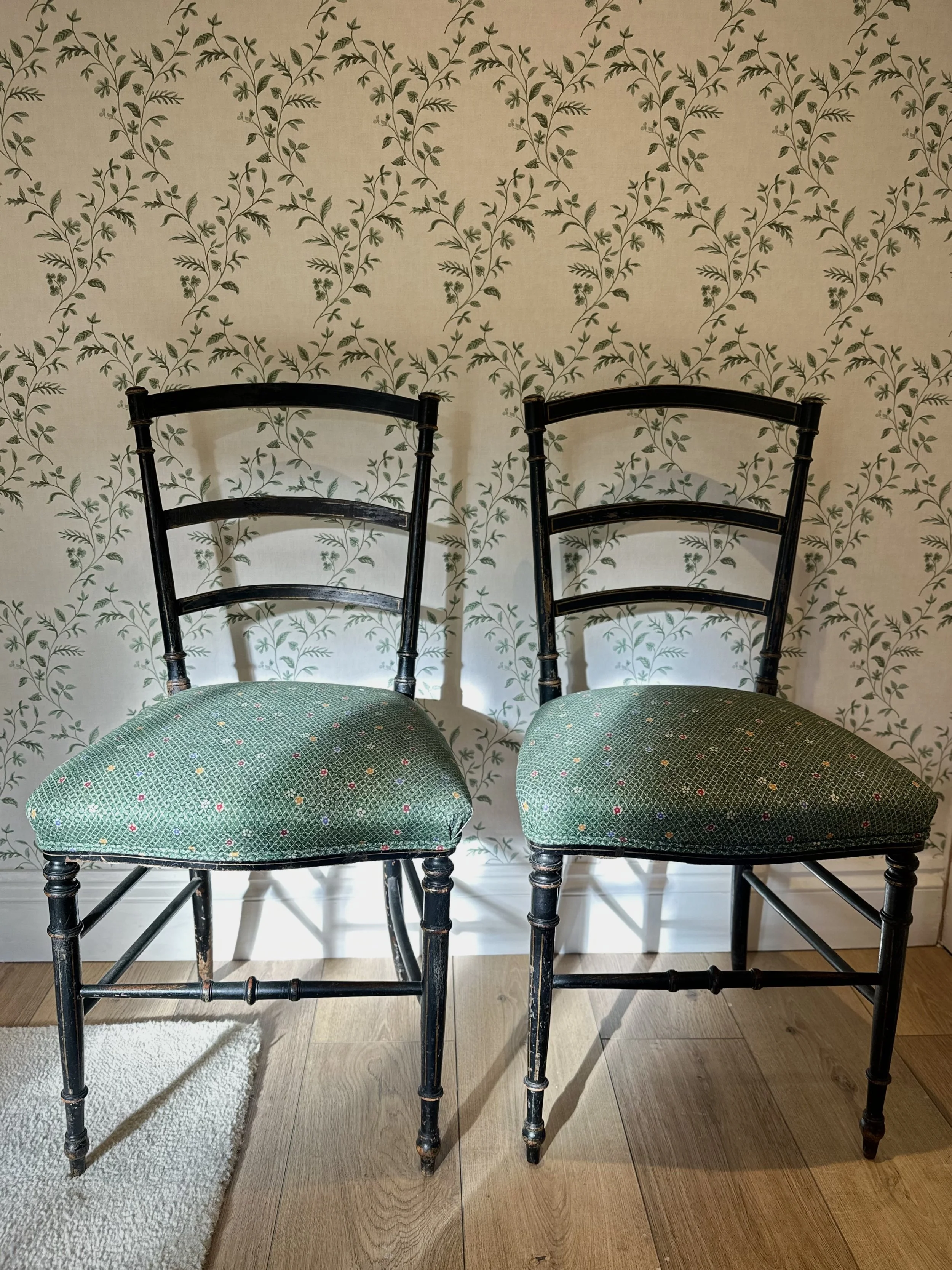
Beautiful pedigree for this pair of very handsome and delicately proportioned ebonised chairs, with a well-documented Parisian atelier lineage. (Atelier lineage attached to the latter part).
Provenance unknown; bearing the stamped mark of the Parisian atelier Maison Lemarchand & Lemoine.
This pair of Parisian bandeau-back side chairs from the late Napoleon III period, circa 1870s, Bears the stamp of H. Lemoine, Paris — Henri Lemoine, son of André Lemoine of the Maison Lemarchand & André Lemoine — working from the Rue des Tournelles address long associated with the family atelier.
Slender and finely proportioned, the chairs are restrained in ornament, with their elegance derived from line, balance, and proportion rather than decoration. The gently curved bandeau backs, with a secondary rail below, are supported by finely turned stiles, giving the chairs a light, architectural presence.
Executed in ebonised beech with subtle parcel-gilt detailing, the frames reflect the continuity of Parisian workshop practice at the time, when furniture-making was often passed from father to son and tradition carried quietly forward. A poised and understated pair, bridging late Second Empire discipline and the early Third Republic Belle Époque elegance and more decorative femininity.
Atelier Lineage:
A stamp on the back inscribed MAISON LEMARCHAND, IN H. LEMOINE, 17 rue des Tournelles IN PARIS Louis Edouard Lemarchand (1795-1872), son of the cabinetmaker Charles-Joseph, settled in rue des Tournelles in 1828. In 1830 he was appointed cabinetmaker of the Duke of Orleans. In 1846 he went into partnership with André Gabriel Lemoine or Lemoyne, wood merchant from the islands, 2 quai de Jemmapes. The latter succeeded him in 1852 and kept the workshops at 17 rue des Tournelles. His son Henri took over from 1863 until 1893. The company was one of Napoleon III's official suppliers.
Condition & Upholstery:
Good antique condition, the ebonised finish shows minor surface wear. Structurally sound.
Seats have been recently upholstered in Achikazi from the Nara collection - borne out of the friendship between Robert Kime and Tory Burch.
19th Century French Seating
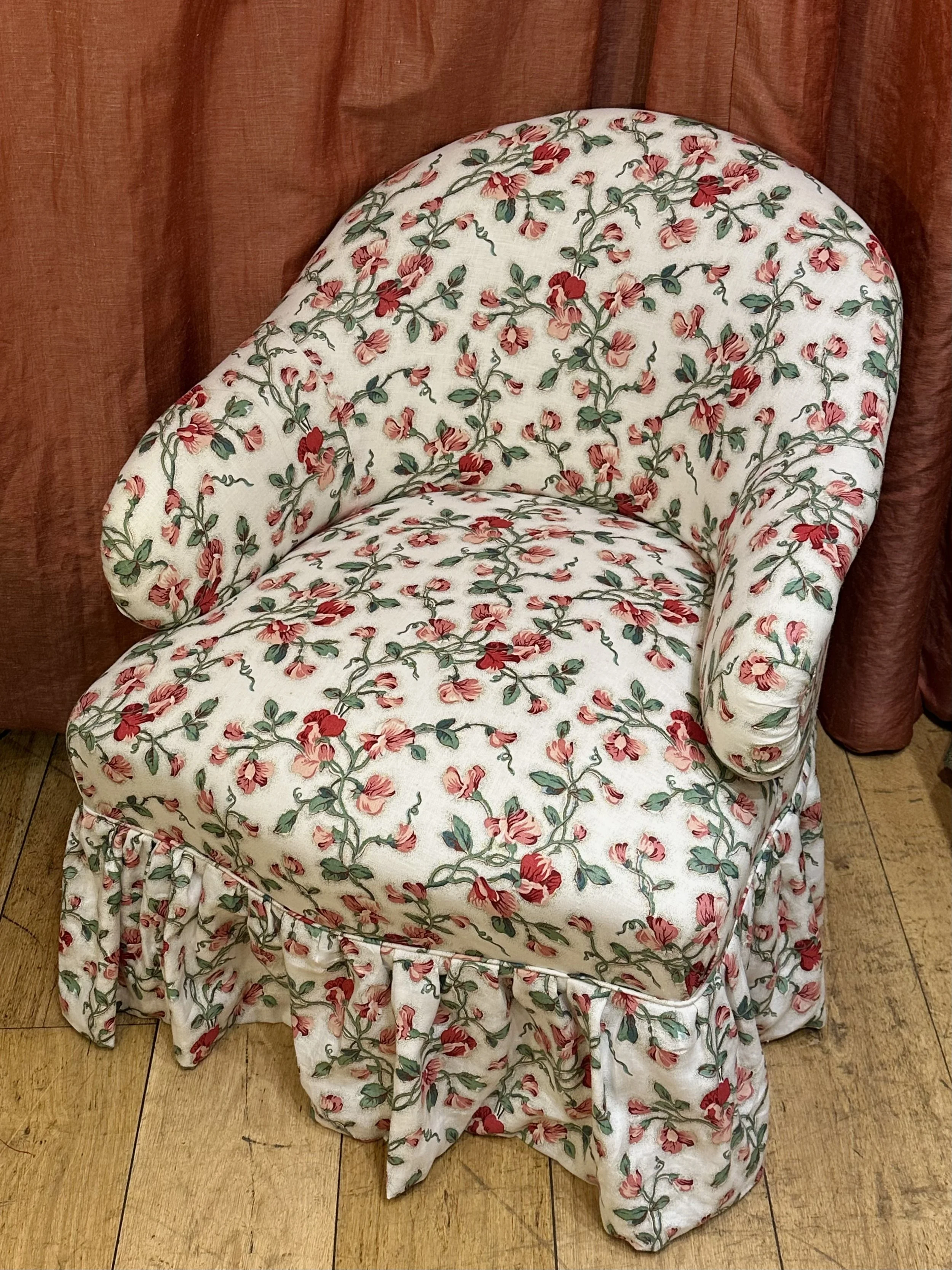
An antique French Slipper Chair from the Louis-Philippe period, circa 1830s, distinguished by its softly rounded, fully traditionally upholstered in natural fibres, it is exceptionally comfortable and supportive.
During the 19th Century, chairs in France were not mass produced, they were made by the regional chair maker for the client, taking into consideration both their physical proportions and the space in which they were to fit. Tehy were made to a far higher quality than most chairs today hence the comfort and longevity.
This particular chair was made as a hybrid of both a slipper chair and crapaud (tub chair) with the most usable features of both.
Originally, designed to assist ladies in their dressing, in particular, pulling on their stockings which is why today, the Slipper Chair is still so sought after for bedrooms, dressing rooms and smaller salons where relaxed, informal seating is preferred.
The chair has been covered in the beautiful small-scale floral glazed linen Sweat Pea from the current Soane Britain collection. Seat Pea by Soane sells at £270 pm making the overall price exceptional value.
Finished with a ruffled skirt, the chair has been traditionally upholstered using natural materials, including horsehair, in keeping with period practices.
This combination of an early nineteenth-century French frame with a carefully chosen contemporary textile results in a characterful piece.
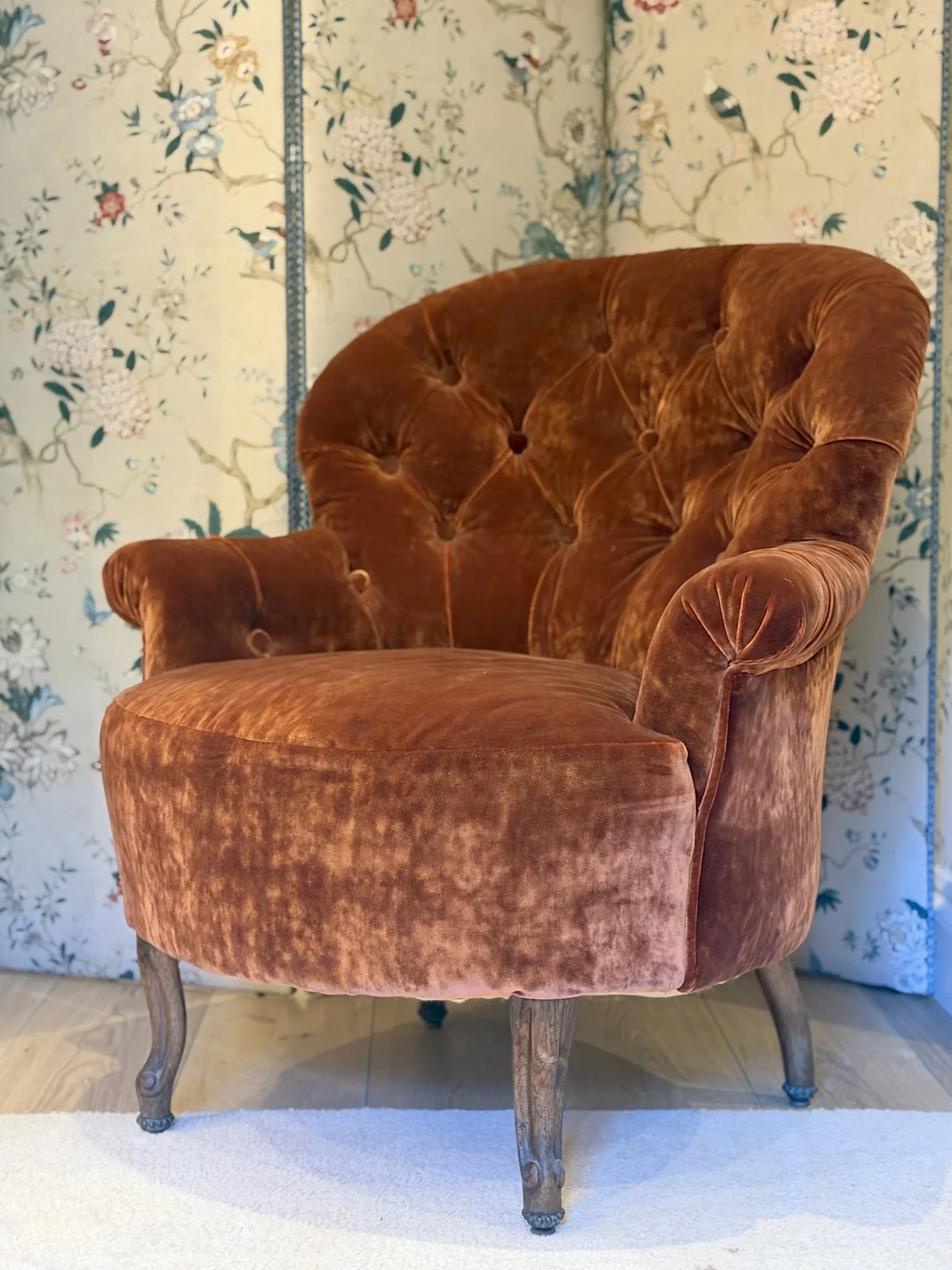
A finely proportioned French deep button-back 'Crapaud' chair of the Napoleon III period, circa 1850–60, exhibiting the enveloping comfort and sculptural upholstery characteristic of Second Empire seating. Traditionally upholstered using natural materials and covered in Pierre Frey aged velvet.
The newly upholstered traditional fillings include horsehair, coconut matting, burlap and calico, with hand tied coil springs ensuring both historical integrity and longevity. It is finished in a richly tonal Pierre Frey aged velvet (Timeo) in rust, chosen for its depth, texture, and sympathetic relationship to the original form.
Raised on finely carved cabriole legs terminating in original metal sabots with delicate beaded collars, the chair retains an elegant sense of proportion and ornament while retaining the comfort-forward character of seatings crafted during the Second Empire period.
A refined and characterful example of mid-19th-century French upholstery, combining authentic craftsmanship with discreetly luxurious upholstery, traditionally reupholstered in our workshop atelier in Notting Hill.
Mirrors
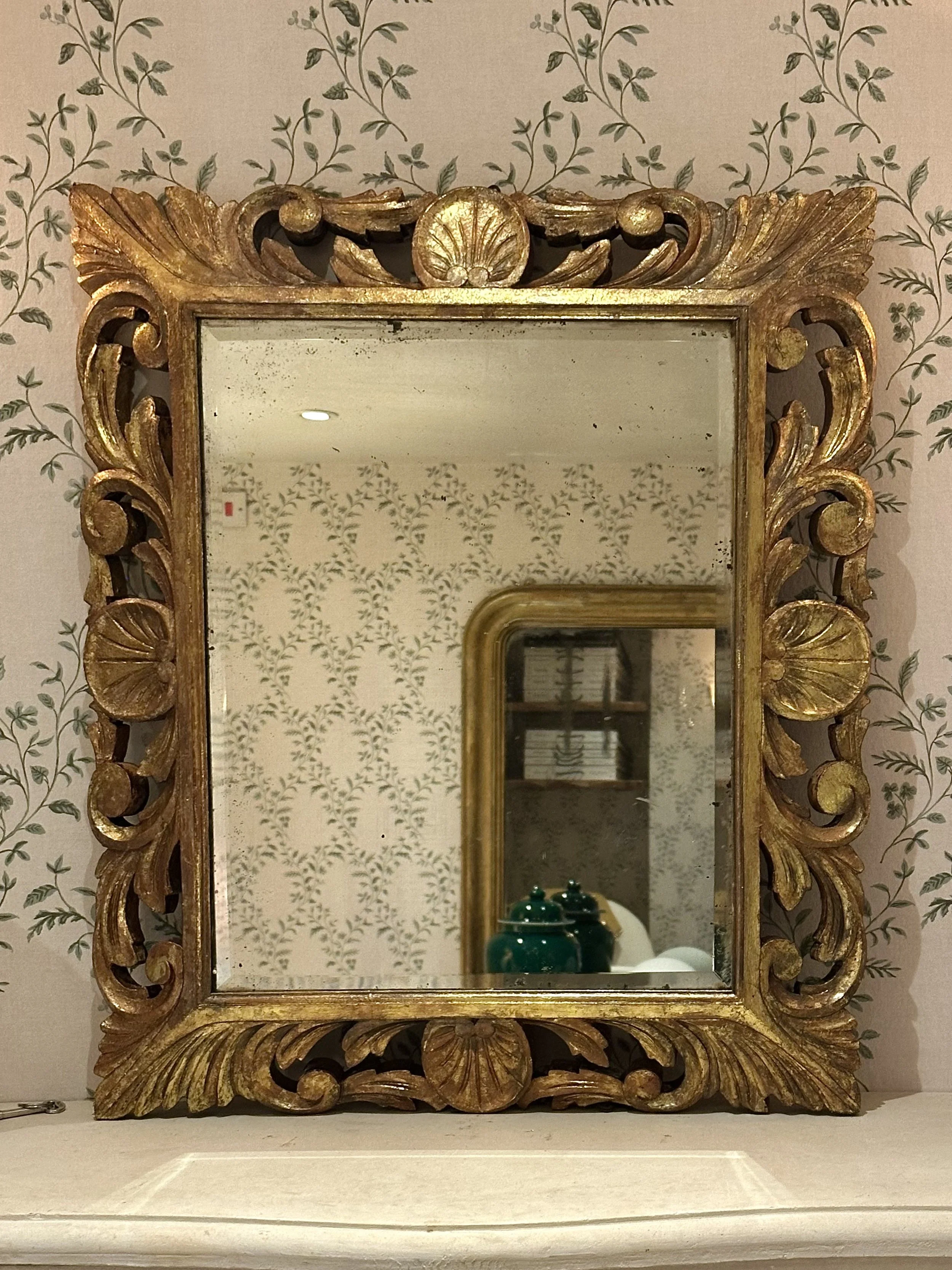
An elegant English Rococo giltwood mirror dating to the mid-18th century, circa 1750. Hand-carved original oak frame with gesso and exquisite water gilding; retaining original bevelled mercury mirror plate.
The frame is richly carved with openwork foliage flowing C-scrolls, deeply undercut acanthus and a bold rocaille crest and apron, characteristic of the mature Rococo vocabulary of the George II period. The carving displays confident depth and movement while retaining a balanced, architectural restraint — a quality particular to English interpretations of the French taste.
The mirror retains its original bevelled mercury plate, its softly mottled foxing lending atmospheric depth and a gentle luminosity that modern glass cannot replicate. The subtle ageing of the plate enhances rather than distracts, contributing to the piece’s decorative presence.
The gilded surface has been sensitively restored by a specialist gilder using traditional water-gilding techniques, respecting the original character while ensuring structural integrity and visual coherence. Water-gilding is a labour-intensive practice that requires meticulous attention executed under mature craftsmanship, preserving the depth, tonal variation and burnished character consistent with period practice.
The reverse boarding appears to have been renewed historically, as is common with mirrors of this age.
refined and highly versatile example of English mid-18th century design, equally compelling above a mantel, in a drawing room, or layered within a more contemporary interior where its sculptural quality can speak.
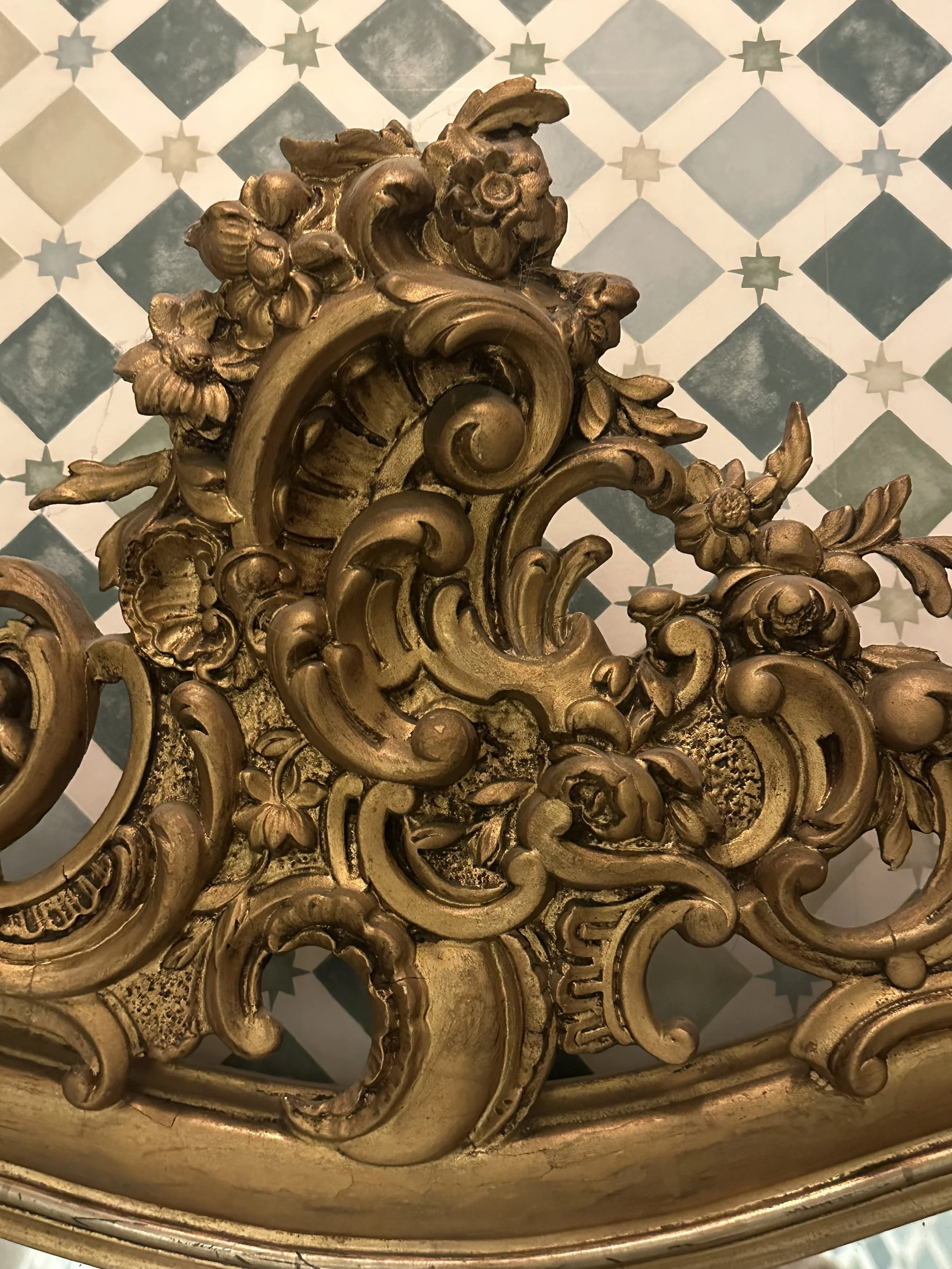
A fine French giltwood mirror of the Louis XV period, circa 1740–1750, carved in the Rococo taste with flowing asymmetry and elegant foliate scrollwork. The arched crest is surmounted by a richly modelled rocaille composition, above a softly contoured frame with carved acanthus details and scroll feet.
The mirror retains its original mercury-glass plate with a bevelled edge, displaying the subtle tonal variation and depth characteristic of 18th-century glass. The gilded surface presents a warm, naturally aged patina consistent with period examples.
France, Louis XV period, circa 1740–1750.