An elegant English Rococo giltwood mirror dating to the mid-18th century, circa 1750. Hand-carved original oak frame with gesso and exquisite water gilding; retaining original bevelled mercury mirror plate.
The frame is richly carved with openwork foliage flowing C-scrolls, deeply undercut acanthus and a bold rocaille crest and apron, characteristic of the mature Rococo vocabulary of the George II period. The carving displays confident depth and movement while retaining a balanced, architectural restraint — a quality particular to English interpretations of the French taste.
The mirror retains its original bevelled mercury plate, its softly mottled foxing lending atmospheric depth and a gentle luminosity that modern glass cannot replicate. The subtle ageing of the plate enhances rather than distracts, contributing to the piece’s decorative presence.
The gilded surface has been sensitively restored by a specialist gilder using traditional water-gilding techniques, respecting the original character while ensuring structural integrity and visual coherence. Water-gilding is a labour-intensive practice that requires meticulous attention executed under mature craftsmanship, preserving the depth, tonal variation and burnished character consistent with period practice.
The reverse boarding appears to have been renewed historically, as is common with mirrors of this age.
refined and highly versatile example of English mid-18th century design, equally compelling above a mantel, in a drawing room, or layered within a more contemporary interior where its sculptural quality can speak.
An elegant English Rococo giltwood mirror dating to the mid-18th century, circa 1750. Hand-carved original oak frame with gesso and exquisite water gilding; retaining original bevelled mercury mirror plate.
The frame is richly carved with openwork foliage flowing C-scrolls, deeply undercut acanthus and a bold rocaille crest and apron, characteristic of the mature Rococo vocabulary of the George II period. The carving displays confident depth and movement while retaining a balanced, architectural restraint — a quality particular to English interpretations of the French taste.
The mirror retains its original bevelled mercury plate, its softly mottled foxing lending atmospheric depth and a gentle luminosity that modern glass cannot replicate. The subtle ageing of the plate enhances rather than distracts, contributing to the piece’s decorative presence.
The gilded surface has been sensitively restored by a specialist gilder using traditional water-gilding techniques, respecting the original character while ensuring structural integrity and visual coherence. Water-gilding is a labour-intensive practice that requires meticulous attention executed under mature craftsmanship, preserving the depth, tonal variation and burnished character consistent with period practice.
The reverse boarding appears to have been renewed historically, as is common with mirrors of this age.
refined and highly versatile example of English mid-18th century design, equally compelling above a mantel, in a drawing room, or layered within a more contemporary interior where its sculptural quality can speak.
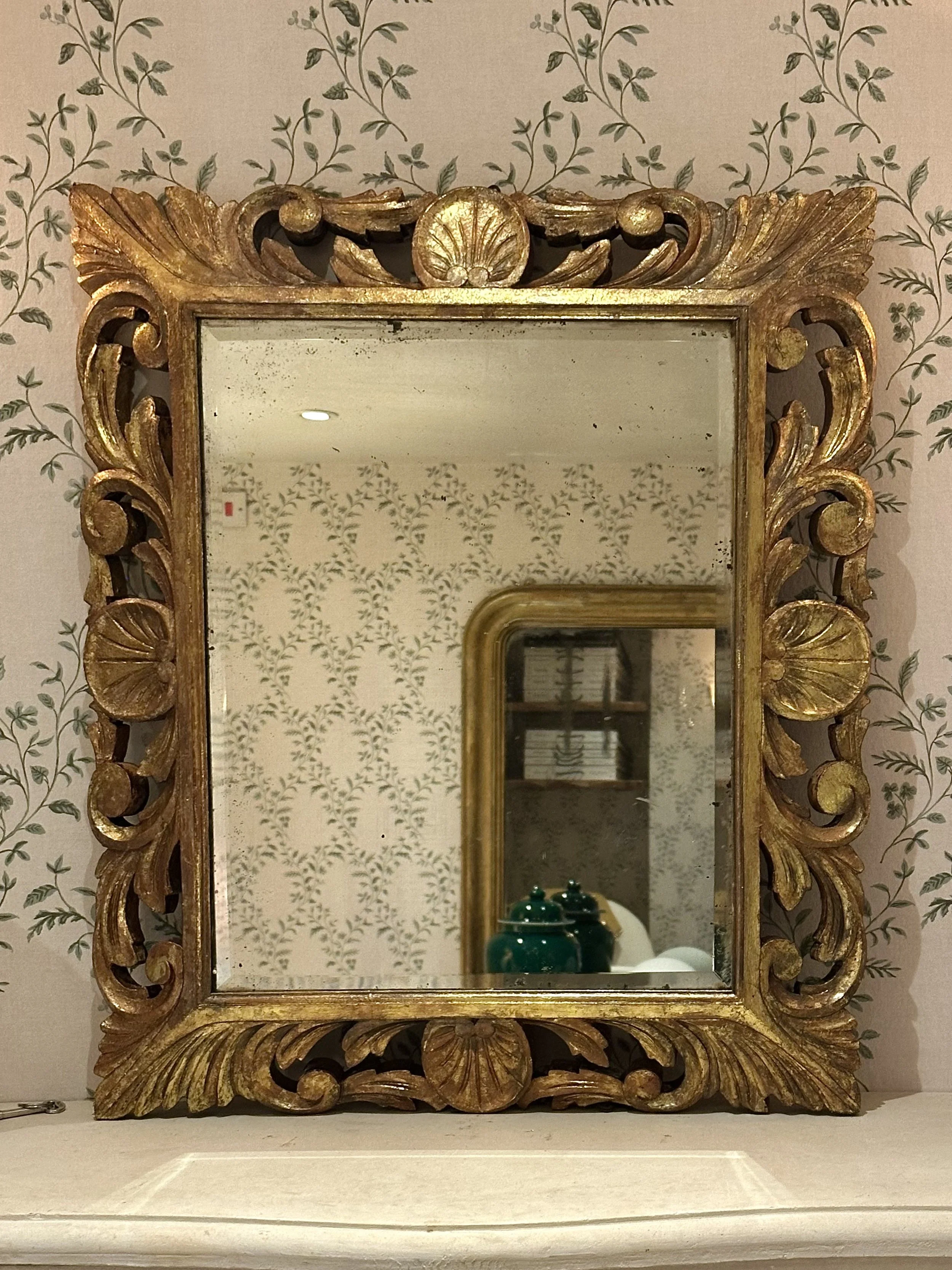 Image 1 of 10
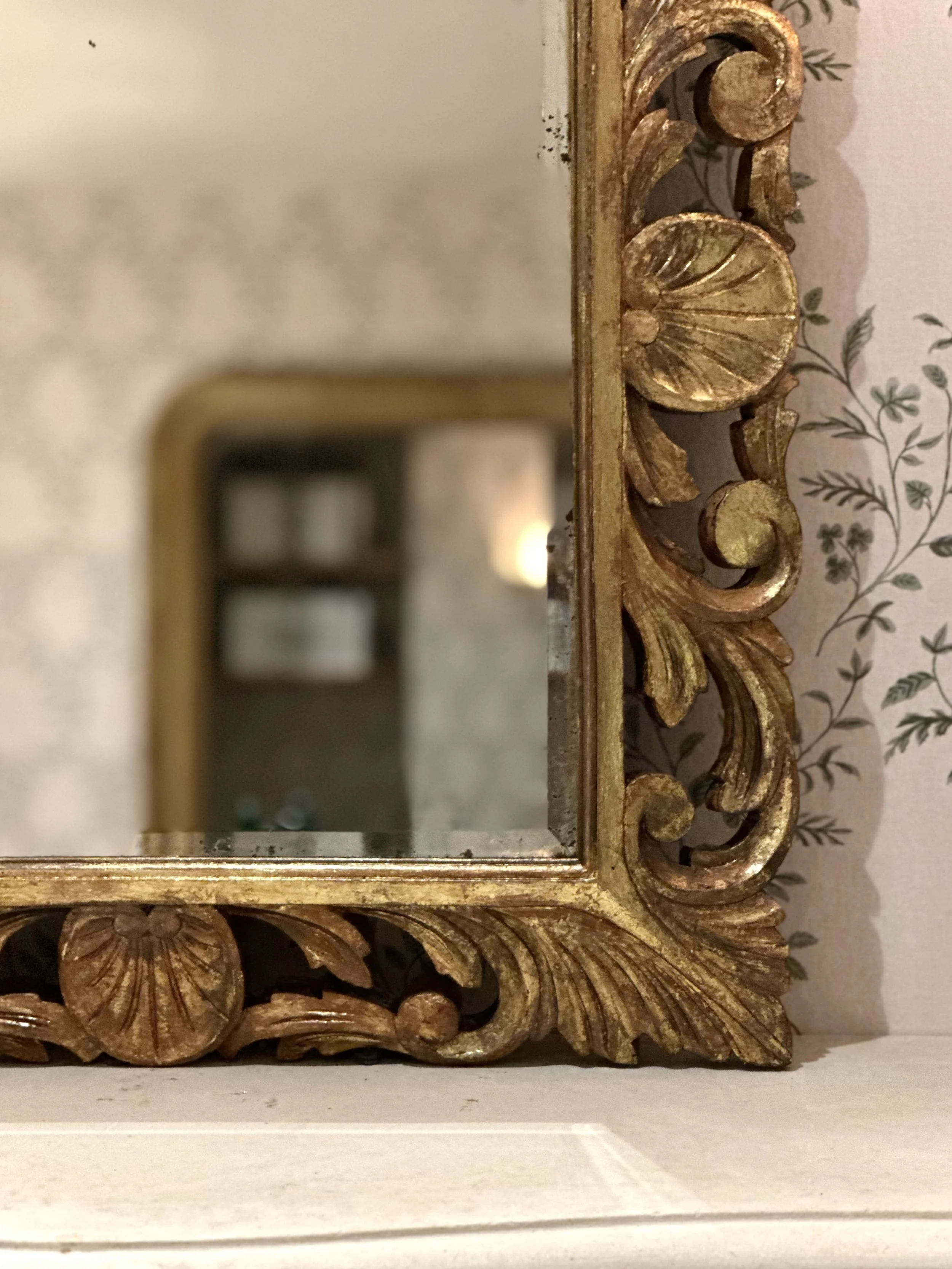 Image 2 of 10
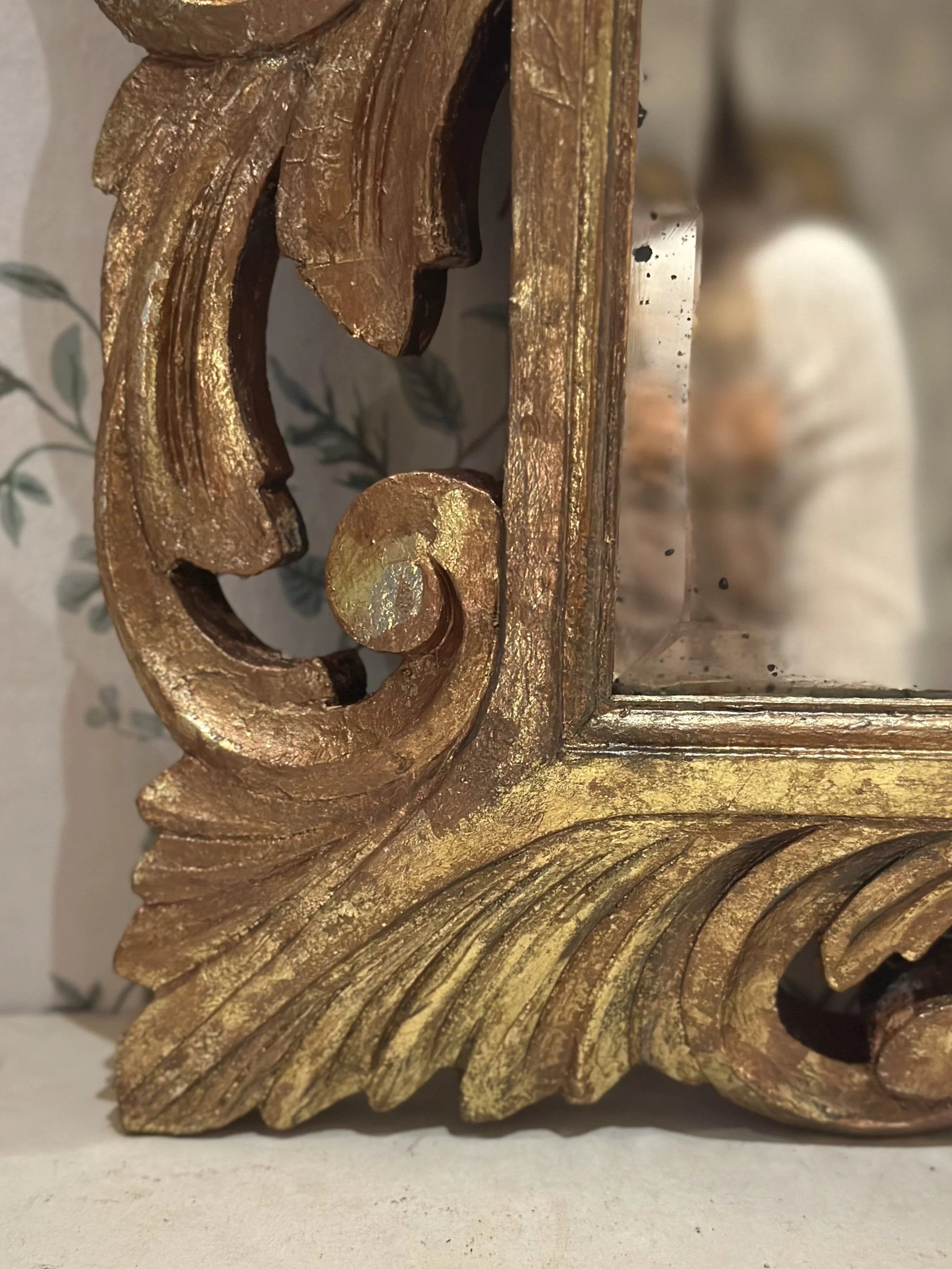 Image 3 of 10
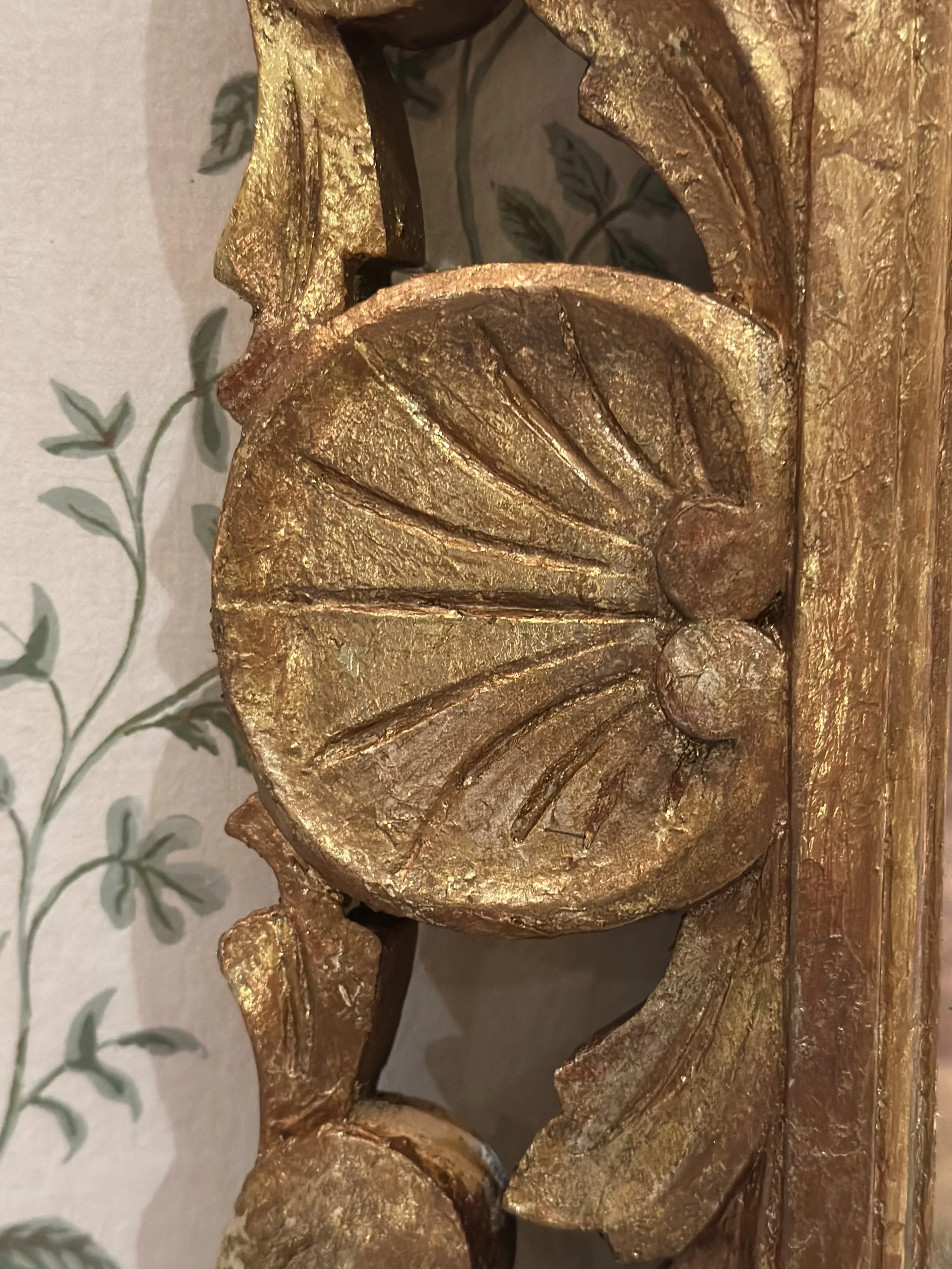 Image 4 of 10
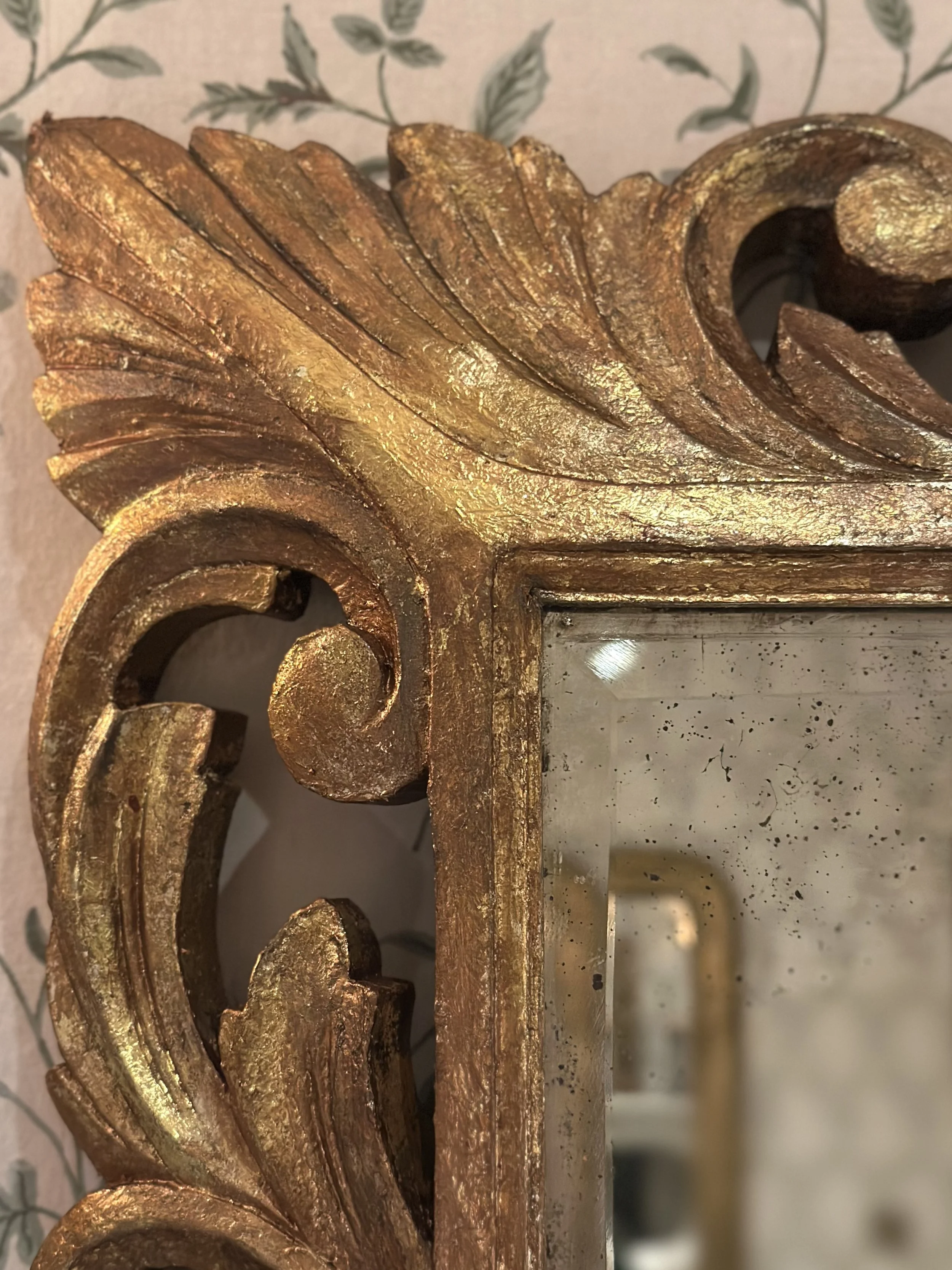 Image 5 of 10
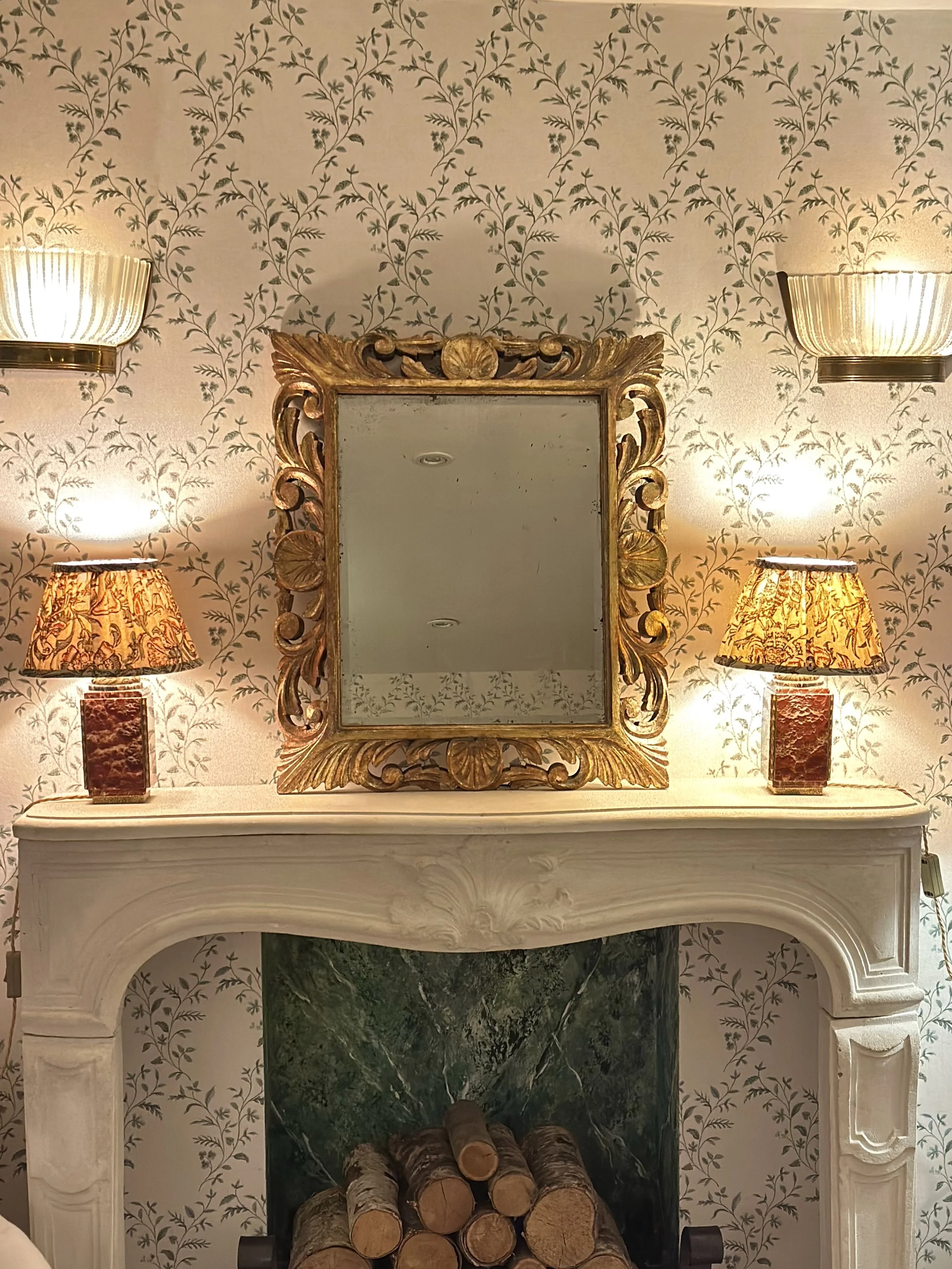 Image 6 of 10
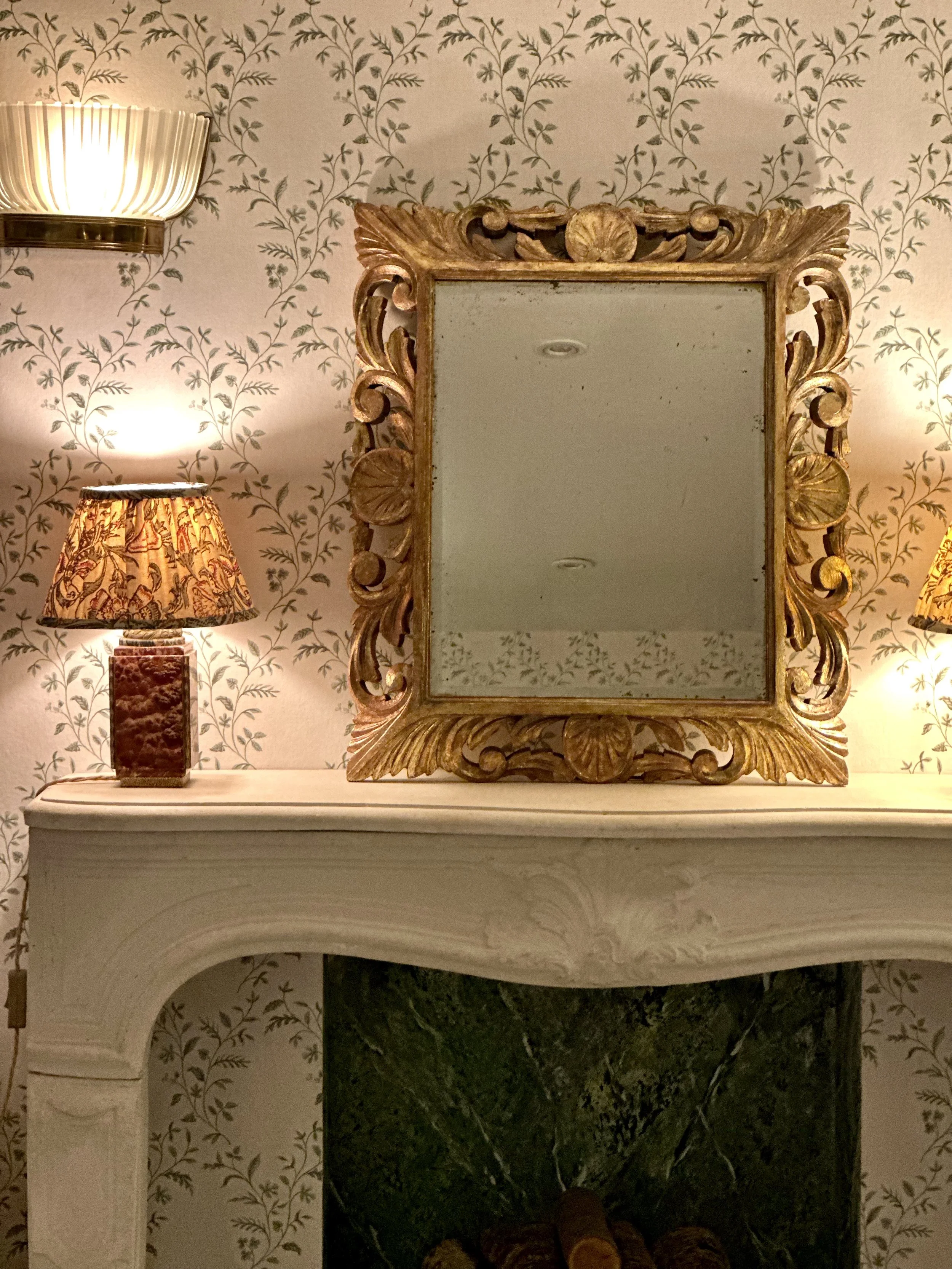 Image 7 of 10
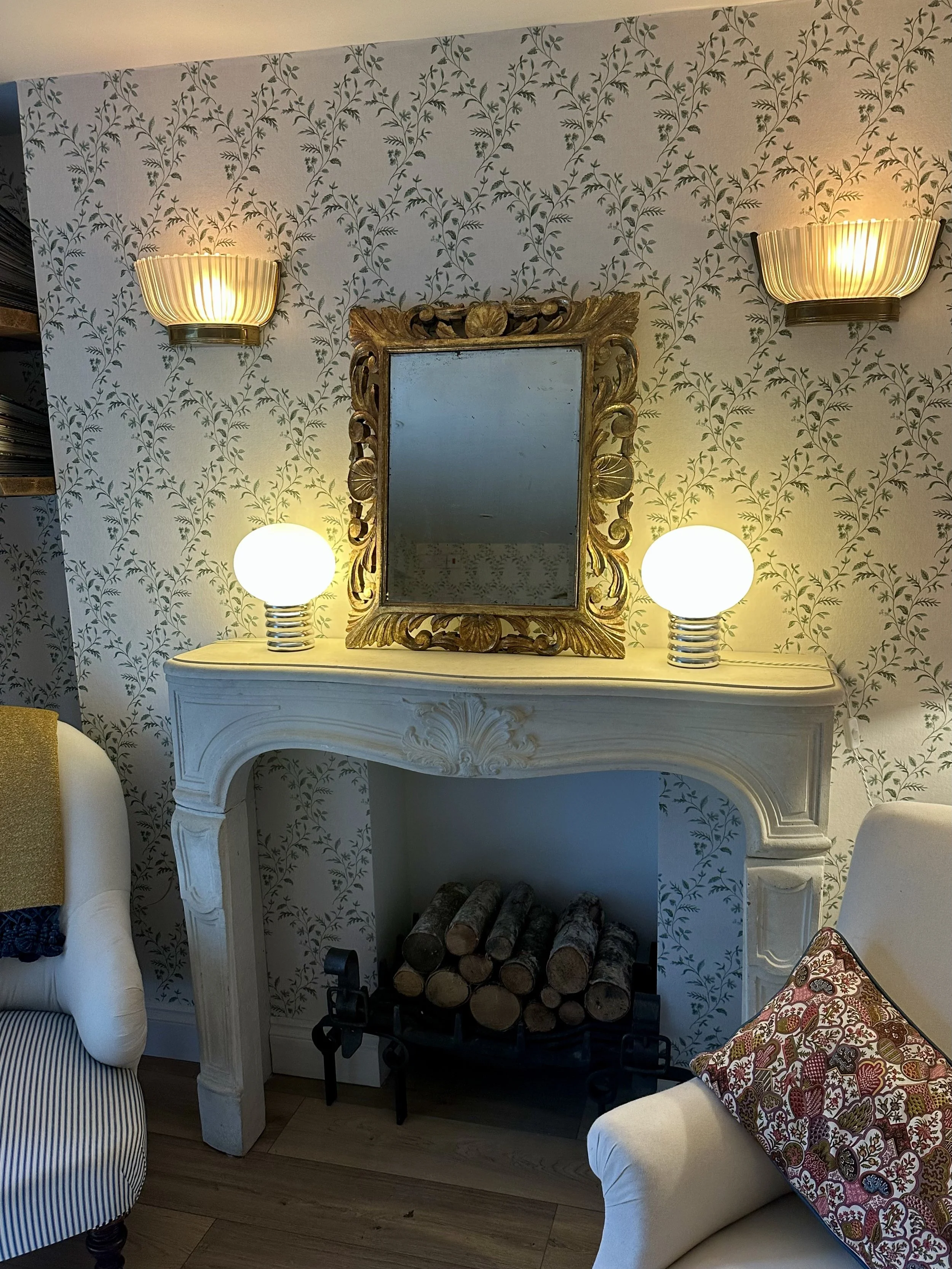 Image 8 of 10
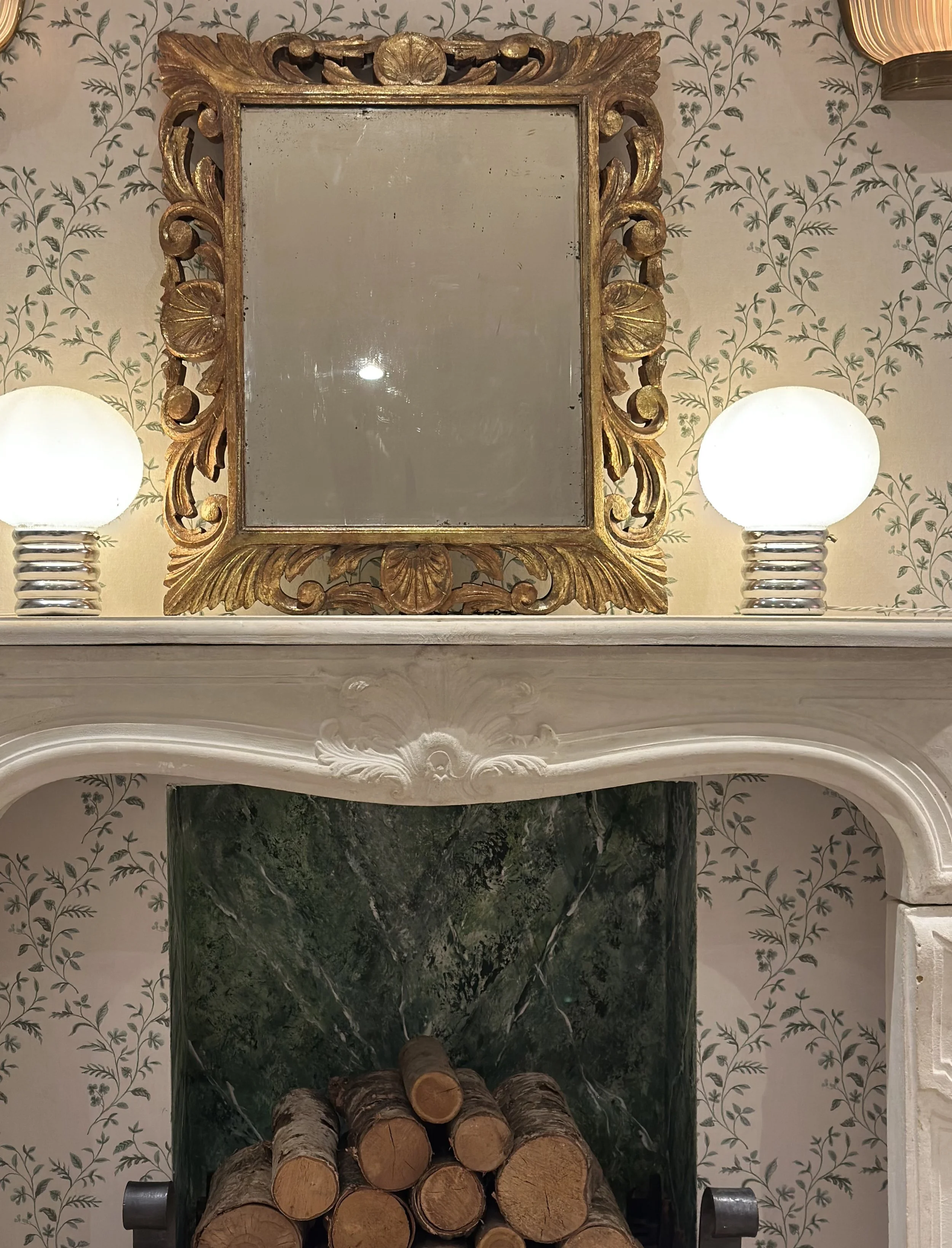 Image 9 of 10
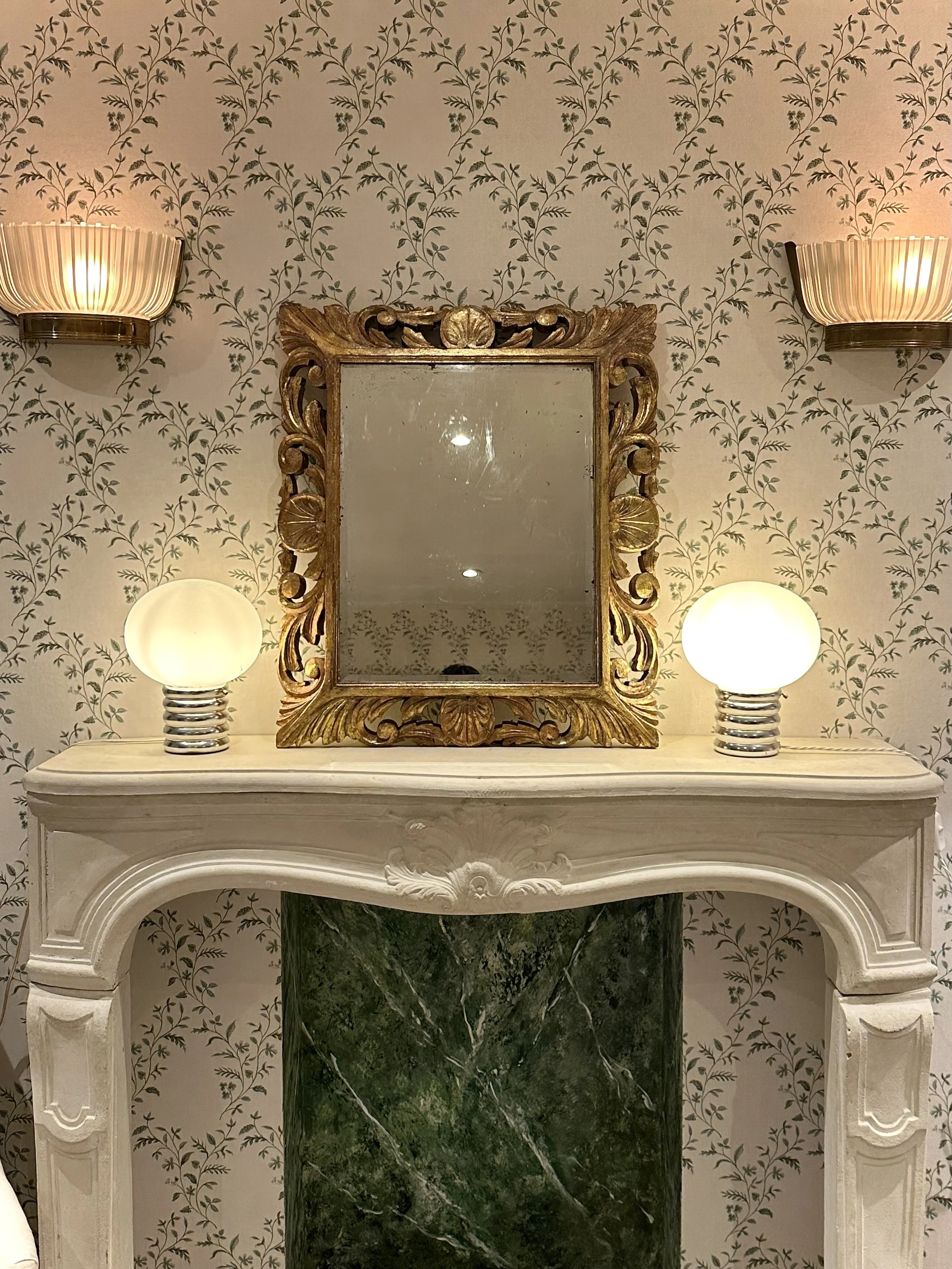 Image 10 of 10